Quick answer: taking an official taxi from Incheon Airport to Seoul is practical, especially late at night or with heavy luggage. Use the designated airport stand, avoid unsolicited drivers, save your destination in Korean, confirm the meter or official dispatch process, and keep the receipt. Costs vary with destination, traffic, tolls, surcharge periods, and taxi type. TMAP, Kakao Map, and Kakao T are separate services; use maps only as a broad route reference.
Information checked: September 10, 2026. Airport transport schedules, fares, facility access, app features, and boarding locations can change. For airport-taxi pickup locations, fare conditions, and late-night surcharge conditions, use the official Incheon Airport Taxi Guide. Confirm current details before travel.
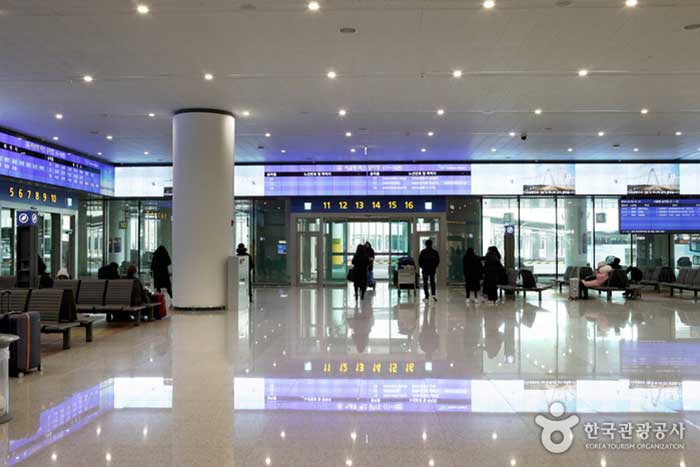
This guide is not meant to scare you away from Korean taxis. Most visitors who use official airport taxi channels have a straightforward ride. The point is that taxis have more variables than trains: traffic, tolls, late-night surcharges, vehicle type, communication, route choice, and vehicle comfort. If you understand those variables before landing, the ride from Incheon Airport to Seoul feels much less stressful.
Use this as a first-time visitor decision guide. It explains how to find official taxis, what “fare anxiety” usually means, how to use route apps calmly, what to check in Kakao T, and when a private transfer or airport bus may be a better fit. For current airport transport details, start with the Incheon Airport official website and the airport’s taxi or transport information at the time of travel. If you are still comparing train, bus, taxi, and transfer choices, see the broader guide to compare AREX, airport bus, taxi, and private transfer options.
Taxi decision summary
- Good taxi situations: late arrival, large luggage, family travel, small hotels away from stations, or a destination where the final walk from public transport looks difficult. For after-midnight timing decisions, also check the late-night arrival options from Incheon Airport to Seoul.
- Use official channels: follow signs to the airport taxi stand or ask an information desk. Do not accept rides from drivers who approach you inside the terminal.
- Expect fare variation: distance, traffic, tolls, late-night surcharge, and taxi category can all change the final amount.
- Prepare the destination: save the hotel name, full address, phone number, and map pin in English and Korean.
- Use apps as support: TMAP can help you understand the route shape, and Kakao T may help with taxi booking, but account setup and payment rules can change.
- Consider comfort: some vehicles may have smoke residue, strong air freshener, food smell, or a ride feel that bothers motion-sensitive passengers.
Airport taxi arrival sequence
Follow this order after landing. It keeps the airport process clear without assuming one final fare.
- Confirm your terminal. Check the current Incheon Airport Taxi Guide for that terminal’s designated pickup locations, or ask an official information desk.
- Use the designated official taxi stand. Follow airport signs and staff directions; decline unsolicited ride offers inside the terminal.
- Show the destination in Korean. Present the hotel or accommodation name, full Korean address, phone number, and map pin before departure.
- Confirm the meter or official dispatch fare process. If the taxi type uses a meter, make sure the meter is used; if it uses an official dispatch or pre-booked arrangement, understand that stated fare process before the vehicle leaves.
- Keep the receipt. Ask for it at the end of the ride and retain it with the vehicle and payment details.
- Check tolls and surcharges against the official guide. Before treating a final amount as unexpected, check the current guide for the taxi category, destination-area conditions, boundary surcharge rules, and applicable late-night surcharge period; tolls and the trip’s actual route can still affect the final charge.
Where to take an official taxi at Incheon Airport
After you exit customs, follow signs for taxi or ground transportation. Incheon Airport has organized taxi boarding areas, and staff or signs can help you find the correct queue for your destination and taxi type. Terminal 1 and Terminal 2 have different layouts, so do not assume the boarding point from an old blog post or video still applies to your flight.
Before you arrive, review the English Incheon Airport Taxi Guide for the current terminal-specific pickup locations and taxi conditions. At the airport, live signs and staff instructions should take priority over memory. If you are unsure which taxi lane to use, ask the official information desk or transport staff and show your destination.
The official queue matters because it reduces uncertainty. It does not guarantee every ride will feel perfect, and it does not make traffic disappear, but it helps you avoid the most obvious problems: untraceable private offers, unclear pricing, or pressure from someone who is not operating through the airport’s normal passenger flow.
Unofficial driver red flags
The main thing to avoid is not “taxis” in general. It is leaving the official process because someone approaches you first. A driver or broker may use friendly English, say the queue is long, offer a “special fare,” or claim they can take you faster. If the person is trying to pull you away from the official taxi area, treat that as a red flag.
- Someone approaches you in the arrivals hall before you reach the official stand.
- The price is vague, pressured, or presented as a one-time deal.
- You are asked to follow the person to a different floor, parking area, or unmarked vehicle without clear official dispatch.
- The driver discourages a meter, receipt, or visible destination confirmation.
- You feel rushed before you have checked your hotel address or payment method.
If any of these happen, you do not need to argue. Say no, keep walking, and ask airport staff where the official taxi queue is. A tired traveler with luggage is easier to pressure, so decide in advance that you will not accept a ride from someone who approaches you first.
Fare anxiety: why the price can vary
Many first-time visitors worry about being overcharged. That concern is understandable, but it helps to separate normal fare variation from suspicious behavior. A taxi from Incheon Airport to Seoul is a long airport ride, not a short downtown hop. The final cost can change because of your exact district, traffic, highway tolls, taxi category, late-night surcharge, waiting time, and the route chosen by navigation.
For example, a ride to western Seoul will not feel the same as a ride to Gangnam or Jamsil. A clear highway run at night will not price exactly like a slow trip in bad weather. A larger or premium vehicle may have a different fare structure from a standard taxi. Because of this, “higher than I hoped” is not automatically a scam. The better question is whether the ride followed an official process, used a meter or official dispatch fare, and produced a receipt.
For the late-night period, do not rely on a universal percentage or an old timetable. The current Incheon Airport Taxi Guide lists the applicable bands by taxi category and destination area. For a Seoul-bound standard taxi, it lists a 20% surcharge from 22:00 to 23:00, 40% from 23:00 to 02:00, and 20% from 02:00 to 04:00; other listed categories and destination areas have their own stated conditions. Check the guide on your travel day, along with any toll or boundary-surcharge condition that applies, rather than treating an estimate as a guaranteed final fare.
How to reduce fare anxiety
- Use the official taxi stand, not a private approach.
- Ask airport staff which taxi category you are boarding if you are unsure.
- Confirm the destination before departure and show a Korean address or map pin.
- Keep a route app open for general direction and travel time awareness.
- Ask for a receipt at the end of the ride and keep it until you are sure nothing was left behind.
If cost certainty matters, compare the written terms of a pre-booked private transfer before you travel. Confirm its current price, meeting process, and conditions directly with the operator; families or travelers arriving after a long flight may value that clarity.
Meter, dispatch fare, and receipt basics
In a regular taxi situation, you should expect a visible meter or an official dispatch/payment arrangement according to the taxi type and airport process. If you do not understand what is happening, ask before the vehicle leaves. You can use simple language: “Meter?” or “Receipt, please.” Having the destination in Korean also reduces the chance of a misunderstanding.
A receipt is useful for three reasons. First, it helps if you need to ask your hotel or a help center about an unusual charge. Second, it can help if you lose a phone, wallet, or bag in the car. Third, it gives you a record for business reimbursement or travel budgeting. If you are too tired to remember, put “receipt” on your arrival checklist before you fly.
Prepare your destination before landing
Hotel names can be confusing in Seoul. Several properties may share similar English names, and some guesthouses use different names on booking sites, maps, and building signs. Do not rely only on a brand name or neighborhood. Save the full address, phone number, and map pin. If possible, also save the Korean name and address from your hotel’s official page or booking confirmation.
Before leaving airport Wi-Fi, open your map and check the destination. If the hotel is in a narrow alley, on a hill, or inside a large complex, take a screenshot of the entrance or nearby landmark. For apartments or small stays, ask the host for a Korean taxi address and any drop-off notes. A taxi driver needs a destination they can use in navigation, not a general idea such as “Myeongdong guesthouse.”
Using TMAP or Kakao Map as a route sanity check
TMAP and Kakao Map are separate map services. Use either only as a broad route reference: check the general direction toward your Seoul district and a plausible travel-time range, not a single turn-by-turn verdict.

Use route checking calmly. Map services can disagree because they weigh toll roads, traffic, construction, and lane choices differently. A taxi driver may follow a route that looks slightly different from your map and still be making a normal decision. What you want is a broad sanity check: the ride should generally head toward your Seoul district, the travel time should be in a plausible range, and there should not be a long unexplained detour.
- Do use TMAP, Kakao Map, or another map only to understand the rough route shape.
- Do check travel time and major road direction before you leave the airport.
- Do not assume every different turn is suspicious.
- Do not start a confrontation unless something is clearly wrong or unsafe.
- If worried, contact your hotel, ask the driver to confirm the destination, or seek help after arrival using the receipt.
Kakao T: what to check before you fly
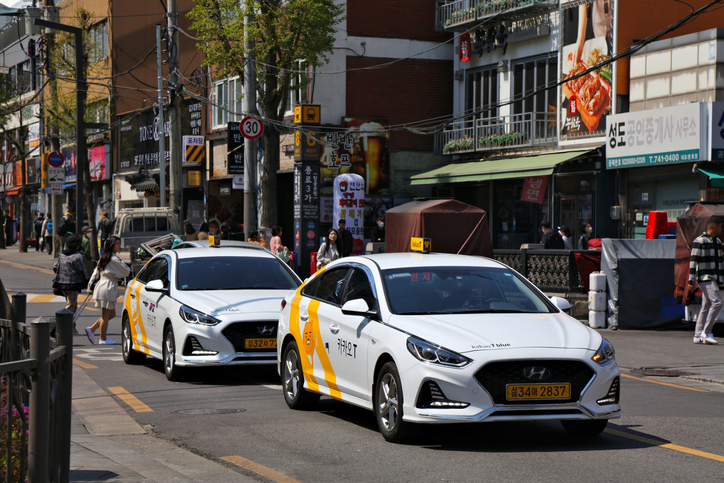
Kakao T is separate from Kakao Map. Before relying on any taxi-hailing option, review the official Kakao Mobility Kakao T service page and current app-store information, then confirm the conditions that apply to your own account and trip. This guide does not promise account setup, phone verification, payment, language support, reservation, or airport-pickup availability.
Kakao T pre-flight checklist
- Check the current account, phone-verification, and payment requirements that apply to you.
- Check the current language and booking information you can actually access.
- Check current airport-pickup and cancellation information for your trip, if any.
- Keep the designated official airport taxi stand or a confirmed transfer as a backup.
Do not treat a map or hailing app as the only arrival plan. Incheon Airport’s official taxi stands, airport bus counters, and pre-booked transfers remain practical alternatives to check for your travel day.
Vehicle comfort: odors, ventilation, and ride feel
Vehicle comfort varies anywhere in the world, and airport taxis are no exception. Many taxis are clean and ordinary. Some may have smoke residue, strong air freshener, food smell, damp upholstery, or heating and air-conditioning settings that do not suit you after a long flight. This is not a reason to assume taxis are bad; it is a reason to keep expectations realistic, especially if you are sensitive to smells or motion.
Electric and hybrid taxis can be quiet, clean-feeling, and pleasant. At the same time, some passengers notice quick acceleration, regenerative braking, or a different ride sensation that can bother motion-sensitive travelers. If you know you get carsick easily, sit where you feel most stable, keep water accessible, avoid reading on the phone continuously, and ask politely for smoother driving if needed.
When a private transfer is better than a taxi
A private transfer is usually better when predictability matters more than saving money. Consider it if you arrive very late, have children or older travelers in the group, carry oversized luggage, need a van, want a driver waiting with your name, or feel anxious about communication. Read the transfer details carefully: meeting point, waiting time, flight delay policy, included tolls, luggage limit, child seat availability, and cancellation rules.
A transfer can also reduce fare anxiety because you know the price or pricing structure before landing. The downside is that you must book ahead and follow the provider’s instructions. If your flight changes, you need to communicate promptly.
When the airport bus is better than a taxi
An airport limousine bus can be better if it stops close to your hotel and is operating at your arrival time. It is usually less private than a taxi but can feel calmer because your luggage goes underneath and you do not need to think about the route. Check the Airport Limousine official website and airport information for current route and stop details.
The bus is less ideal if the nearest stop is far from your hotel, if you arrive after service is limited, or if the final walk involves stairs, hills, or dark side streets. The best choice is not always “bus versus taxi.” Sometimes the smartest option is bus to a major stop, then a short taxi to the hotel.
If something goes wrong
If you think there is a problem during or after the ride, stay calm and focus on records. Save the receipt, note the vehicle number if visible, keep payment records, and write down the time, pickup location, and destination. Your hotel front desk may be able to help you interpret the receipt or contact a taxi company, especially for lost items.
For immediate safety issues, seek help from airport staff, hotel staff, or local authorities. For fare or service concerns, a receipt and clear details are much more useful than a vague memory. This is another reason to avoid unofficial rides: they are harder to trace and harder to explain if something needs follow-up.
Incheon Airport taxi checklist
- Review official airport taxi information before arrival.
- Use the official taxi stand or a clearly booked transfer.
- Decline unsolicited rides inside the terminal.
- Prepare your destination in Korean, including address and phone number.
- Confirm the meter or official dispatch/payment arrangement.
- Keep TMAP or another map open for broad route awareness.
- Ask for a receipt and keep it until the ride is fully settled.
- Choose a bus or transfer if that better fits your luggage, budget, or stress level.
Frequently Asked Questions
How much is a taxi from Incheon Airport to Seoul?
There is no single guaranteed total for every trip from Incheon Airport to Seoul. The final amount can change by destination, traffic, tolls, late-night surcharge, waiting time, and taxi category. Before you ride, check the current official airport guidance and treat any estimate as a range rather than a guaranteed final price.
Where do I take an official taxi at Incheon Airport?
Use the signed airport taxi stand or ask an information desk which lane fits your destination and taxi type. Staying in the official queue is the simplest way to reduce confusion, fare pressure, and unofficial-driver risk after a long flight.
Is it safe to take a taxi from Incheon Airport to Seoul?
Yes, using the official airport taxi stand is a normal option for visitors. The key is to stay within official channels, avoid unsolicited drivers, prepare your destination clearly, and keep a receipt. Taxis have more variables than trains or buses, but they are often the practical choice late at night or with heavy luggage.
How do I avoid unofficial taxis at Incheon Airport?
Follow airport signs to the official taxi queue, or ask the information desk which lane to use for your destination and taxi type. Decline anyone who approaches you inside the terminal with a private offer, vague price, or pressure to leave the queue. If unsure, stay in the official transport area and ask airport staff before boarding.
Should I use Kakao T at Incheon Airport?
Kakao T can be useful, but test it before you travel. Account setup, phone verification, payment options, reservation features, airport pickup rules, and language support can change. If it works for you, great. If not, use the official taxi stand, airport bus, or a pre-booked transfer.
Can I use TMAP to check if the taxi route is fair?
You can use TMAP as a broad route sanity check, but do not overinterpret every turn. Drivers may follow different navigation based on traffic, toll roads, or construction. Use the app to understand the general direction and travel time, not as a reason to argue about small differences.
Why did my taxi fare cost more than I expected?
Possible reasons include distance, traffic, tolls, late-night surcharge, taxi category, waiting time, or your exact Seoul neighborhood. A higher-than-expected fare is not automatically a scam. What matters is whether you used an official channel, the fare process was clear, and you received a receipt.
What if the taxi smells like smoke or strong air freshener?
Vehicle condition can vary. If you are sensitive to smells, be prepared that some vehicles may have smoke residue, air freshener, food smell, or other odors. If the issue is severe before departure, ask airport staff whether you can change vehicles. For mild discomfort, open ventilation if possible and keep the ride as calm as you can.
Does the official taxi pickup location depend on whether I arrive at Terminal 1 or Terminal 2?
Yes. The official Incheon Airport Taxi Guide lists designated pickup locations separately for Terminal 1 and Terminal 2, and they vary by taxi category and destination area. Check the current guide or ask the official information desk after you confirm your terminal.
How can I check a late-night taxi charge without assuming a fixed total?
Start with the official guide’s current category, destination-area, boundary-surcharge, and late-night conditions, then confirm the meter or official dispatch fare process before departure. Keep the receipt and compare the completed trip with those conditions afterward; traffic, route, and tolls mean the guide is not a promise of one final total.
Final recommendation
A taxi from Incheon Airport to Seoul is neither something to fear nor something to use carelessly. It is a flexible door-to-door option that works best when you use the official stand, understand why fares vary, prepare your destination, and keep basic records. Apps can reduce uncertainty, but they should support your decision rather than become your only plan.
If you want the cheapest predictable route and your hotel is well connected, compare AREX or the airport bus first. If you want the simplest late-night or luggage-friendly arrival, a taxi or private transfer may be worth the higher cost. The right choice is the one that gets you to your actual hotel safely, calmly, and without unnecessary confusion after a long flight.
1 thought on “Incheon Airport to Seoul Taxi: Fares, Official Stands, Apps, and Safety Tips”